30-Day Blueprint for Migrating Legacy Attribution to AI MMM
Advertisements
AI Marketing Mix Modeling can help businesses evaluate marketing performance beyond last-click attribution. This practical 30-day migration blueprint covers data preparation, model development, validation, and deployment, with clear deliverables for each stage.
Moving from traditional attribution to AI Marketing Mix Modeling requires more than installing analytics software. Businesses must organize reliable data, choose appropriate methods, and establish a process for evaluating results.
Legacy attribution reports can help explain tracked customer interactions, but they may not capture offline advertising, broader market influences, or incremental business impact.
This 30-day guide provides a structured starting point for building an initial MMM model, testing its reliability, and preparing marketing teams to use the findings responsibly.
Understanding the Shift to AI Marketing Mix Modeling
AI Marketing Mix Modeling combines statistical modeling with automated analytical techniques to estimate relationships between marketing activity and business outcomes.
Unlike user-level attribution, MMM generally works with aggregated information such as weekly advertising spend, sales, pricing, promotions, and external market conditions.
The approach can help evaluate channels that traditional tracking misses. However, reliable conclusions require sufficient data, sensible assumptions, and independent validation.
Limitations of Legacy Attribution Models
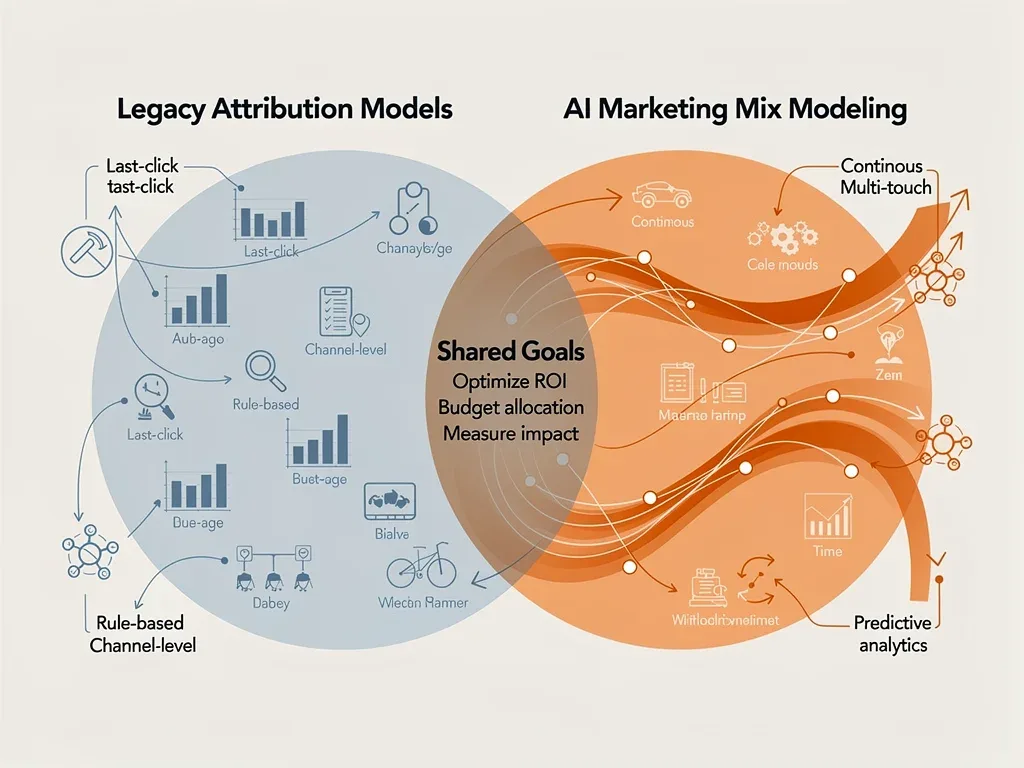
Last-click and first-click attribution assign conversion credit according to defined customer interactions. These rules are straightforward but can oversimplify complex purchasing behavior.
AI Marketing Mix Modeling provides a different analytical perspective by estimating channel contributions using aggregated performance patterns over time.
Neither method is universally superior. Attribution can support operational campaign reporting, while MMM may help with broader budget planning and incremental impact estimates.
Limited Channel Visibility: Some attribution reports omit offline media or poorly tracked interactions.
Rule-Based Credit: First-click and last-click methods follow fixed allocation rules.
Privacy Constraints: Changes in identifiers and tracking permissions can affect user-level measurement.
External Influences: Attribution may not adequately account for seasonality, prices, or economic conditions.
What AI Adds to Marketing Mix Modeling
Modern MMM systems can use automated parameter searches, statistical regularization, Bayesian inference, and other computational methods to support model development.
These capabilities make AI Marketing Mix Modeling useful for exploring complex relationships between advertising, sales, and environmental factors.
However, a more sophisticated algorithm does not guarantee better conclusions. Model transparency, data quality, and validation remain essential to decision-making.
The 30-Day Migration Blueprint: Timeline and Deliverables
A structured AI Marketing Mix Modeling migration benefits from realistic milestones. The first month should focus on producing a documented and testable initial model.
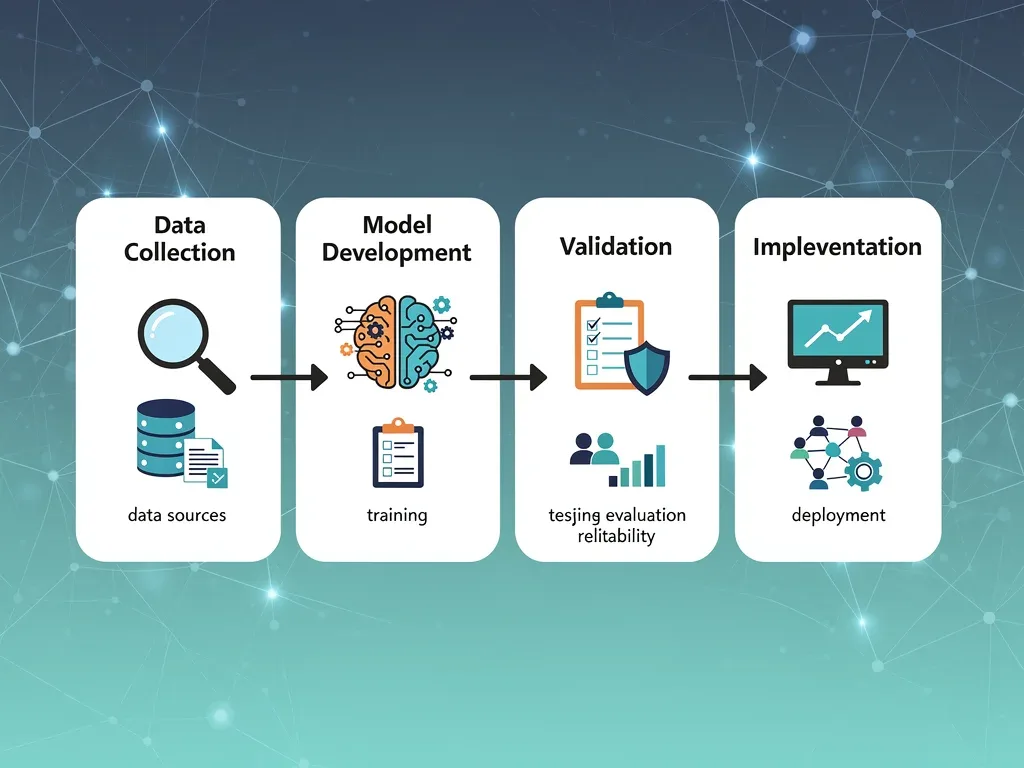
The proposed timeline divides work into four phases: data assessment, model development, validation, and operational integration.
Thirty days may be sufficient for a pilot when historical data and technical expertise already exist. Organizations with fragmented systems may need substantially longer.
Four Phases of the 30-Day Plan
During days 1–7, teams identify data sources, confirm measurement objectives, and address critical quality issues before selecting modeling methods.
Days 8–15 focus on building an initial AI Marketing Mix Modeling implementation. Days 16–23 are reserved for diagnostics, validation, and stakeholder review.
The final period, days 24–30, covers reporting, controlled implementation, and an operating plan for future model updates.
Days 1–7: Data inventory, quality assessment, and preparation.
Days 8–15: Model selection, baseline development, and initial training.
Days 16–23: Validation, sensitivity testing, and interpretation.
Days 24–30: Dashboard integration, stakeholder training, and pilot deployment.
Phase 1: Days 1–7 — Data Assessment and Preparation
The first week of an AI Marketing Mix Modeling migration should establish whether the organization has sufficient historical information for meaningful analysis.
Teams need to identify advertising spend, business outcomes, pricing changes, promotions, and other relevant variables across a consistent timeline.
Data availability is a major limitation. A completed 30-day project cannot compensate for insufficient historical variation or missing information.
Days 1–2: Define the Business Objective
Begin by selecting the business outcome the model should explain. Common examples include revenue, transactions, qualified leads, or another measurable KPI.
For AI Marketing Mix Modeling, stakeholders should agree on the exact metric definition, geographic scope, reporting frequency, and decisions the model should support.
Document what success means before starting technical work. This prevents teams from optimizing a metric that does not reflect business priorities.
Days 3–5: Consolidate Marketing Data Sources
Collect historical records from advertising platforms, customer relationship systems, business intelligence tools, and relevant offline sales channels.
When preparing AI Marketing Mix Modeling, standardize dates, currencies, channel names, revenue definitions, and other measurement conventions.
Ensure the dataset contains meaningful historical variation. Highly correlated channels or simultaneous campaigns can make individual effects difficult to distinguish.
Media Data: Spend, impressions, reach, or frequency where available.
Business Outcomes: Revenue, orders, conversions, or qualified leads.
Control Variables: Pricing, promotions, holidays, seasonality, and relevant external factors.
Data Documentation: Source systems, refresh frequency, definitions, and known limitations.
Days 6–7: Run Data Quality Checks
Before fitting a model, inspect missing values, unusual spikes, inconsistent reporting periods, and unexplained changes in measurement methods.
Reliable AI Marketing Mix Modeling requires alignment between media inputs and the business outcomes being analyzed.
Complete the week with a documented dataset and a list of unresolved limitations. If major problems remain, delay model development rather than treating incomplete data as reliable.
Check reporting periods for missing weeks or duplicated dates.
Reconcile advertising totals with source platforms.
Review major campaign launches and tracking changes.
Document outliers and how they were handled.
Confirm that stakeholders approve the measurement definitions.
Phase 2: Days 8–15 — Model Development and Training
The second phase turns prepared data into an initial statistical model. The goal is to estimate marketing relationships using methods appropriate for the available information.
An AI Marketing Mix Modeling implementation may incorporate carryover effects, saturation curves, seasonality, and additional explanatory variables.
Model selection should balance interpretability, statistical reliability, available expertise, and business requirements rather than prioritizing complexity alone.
Days 8–10: Choose a Modeling Framework
Select an approach that matches the organization's analytical capabilities. Options include custom econometric models and established open-source MMM frameworks.
For AI Marketing Mix Modeling, Google Meridian provides Bayesian modeling capabilities, while Meta Robyn offers automated optimization tools built around statistical modeling.
Both frameworks require careful configuration and interpretation. Teams should review documentation, input requirements, and computational needs before selecting an option.
Model Transparency: Favor methods whose assumptions can be inspected.
Data Requirements: Confirm that available historical records are suitable.
Team Expertise: Consider statistics, programming, and marketing analytics capabilities.
Validation Tools: Evaluate diagnostics and support for experimental calibration.
Days 11–13: Build an Initial Model
Begin with a documented baseline before exploring more complex methods. This makes it easier to understand whether additional complexity improves performance.
In AI Marketing Mix Modeling, adstock transformations can represent delayed media effects, while saturation functions may capture diminishing returns.
Fit the initial model using prepared historical data. Record assumptions, channel definitions, training periods, and configuration settings for reproducibility.
Days 14–15: Review Model Diagnostics
Inspect prediction errors, parameter behavior, and the plausibility of estimated channel contributions before interpreting business results.
A reliable AI Marketing Mix Modeling process should investigate unstable estimates, implausible signs, and unexplained residual patterns.
Document the first model version and its limitations. Do not treat attractive charts or high predictive accuracy as proof of causal validity.
Phase 3: Days 16–23 — Validation and Interpretation
The third phase evaluates whether the model is sufficiently reliable to inform decisions. Validation should examine both statistical performance and business plausibility.
For AI Marketing Mix Modeling, predictions can be compared with withheld historical periods, while parameter sensitivity tests reveal how assumptions influence conclusions.
Experimental evidence provides an additional source of validation when available. Without it, channel incrementality estimates depend more heavily on modeling assumptions.
Days 16–18: Test Predictive Performance
Use a time-based validation period that was not included in model training. Compare actual outcomes with model predictions.
When evaluating AI Marketing Mix Modeling, consider error metrics such as mean absolute percentage error where appropriate, alongside other suitable diagnostics.
Prediction accuracy alone is insufficient. A model can forecast revenue reasonably well while misattributing changes to individual marketing channels.
Holdout Evaluation: Test on historical periods excluded from training.
Residual Analysis: Review unexplained patterns in prediction errors.
Parameter Stability: Check whether estimates change excessively under reasonable assumptions.
Business Plausibility: Investigate contributions that conflict with available evidence.
Days 19–21: Calibrate Against Incrementality Tests
Incrementality experiments can provide evidence about the effect of advertising compared with an appropriate counterfactual scenario.
For AI Marketing Mix Modeling, results from geographically controlled tests or other credible lift studies may help calibrate channel estimates.
Calibration must account for differences in geography, campaign timing, spending levels, and treatment definitions. Experimental results are not automatically transferable across settings.
Days 22–23: Translate Results into Budget Decisions
After validation, summarize which channels appear to contribute to the business outcome and how uncertain those estimates remain.
AI Marketing Mix Modeling may also produce response curves that illustrate modeled returns at different advertising investment levels.
Use these findings to develop budget scenarios rather than immediately applying large changes. Document assumptions and explain uncertainty to decision-makers.
Estimate channel contribution and associated uncertainty.
Compare modeled returns across investment scenarios.
Identify opportunities for further experimentation.
Prepare a concise summary for marketing and finance stakeholders.
Phase 4: Days 24–30 — Integration and Controlled Deployment
The final phase focuses on making the model usable by marketing teams. A successful pilot requires clear reporting, ownership, and procedures for ongoing maintenance.
Operational AI Marketing Mix Modeling should connect analytical outputs with planning activities while keeping assumptions visible.
Automated recommendations should not be treated as unquestionable instructions. Human review and controlled tests remain important before major spending decisions.
Days 24–26: Integrate Results With Existing Systems
Prepare a reporting view that includes business outcomes, media inputs, modeled contributions, and relevant diagnostic information.
For AI Marketing Mix Modeling, a dashboard should clarify the reporting period and distinguish observed performance from modeled estimates.
Integrate validated data feeds where feasible. Avoid presenting MMM as real-time causal measurement when the model relies on periodic aggregated updates.
Days 27–28: Train Stakeholders and Define Ownership
Marketing and finance teams need to understand how the model produces recommendations and which decisions it can reasonably support.
Training for AI Marketing Mix Modeling should explain uncertainty, modeled incrementality, response curves, and differences from platform attribution reports.
Assign responsibility for data refreshes, quality checks, model updates, and approval of major recommendations. Clear ownership supports consistent operation.
Days 29–30: Launch a Controlled Budget Pilot
Choose a limited decision where the organization can test a model-informed recommendation without creating excessive operational risk.
Use AI Marketing Mix Modeling outputs to develop a proposed allocation, then compare results against an appropriate baseline or experimental design.
Conclude the month with a pilot report and a list of remaining tasks. Full production deployment may require more historical data, calibration, and additional validation.
Pilot Scope: Identify a specific channel, region, or budget decision.
Approval Process: Confirm who authorizes changes.
Measurement Plan: Establish how outcomes will be evaluated.
Risk Controls: Set spending limits and review checkpoints.
Next Steps: Document improvements needed before broader deployment.
Addressing Challenges in AI Marketing Mix Modeling Migration
Migration projects may encounter inconsistent data, organizational resistance, and technical limitations. These problems can affect both implementation speed and analytical quality.
AI Marketing Mix Modeling requires cooperation between marketing, finance, analytics, and data engineering teams to maintain consistent definitions and reliable inputs.
Planning for these challenges reduces the risk of producing outputs that appear precise but cannot support informed business decisions.
Overcoming Data Integration Complexities
Advertising platforms may use different currencies, time zones, attribution windows, and definitions. These differences complicate aggregation.
Before training AI Marketing Mix Modeling, establish documented rules for reconciling datasets and handling missing or unusual observations.
Automated pipelines can improve repeatability, but they still require monitoring. Data quality should be reviewed whenever source systems change.
Document every source and its measurement definitions.
Standardize dates, currencies, and campaign classifications.
Implement checks for missing values and unexpected changes.
Assign responsibility for maintaining data quality.
Managing Limited Data and Channel Overlap
MMM can struggle when several channels increase or decrease spending together. Their effects may be statistically difficult to separate.
Insufficient historical variation can limit AI Marketing Mix Modeling reliability even when the chosen algorithm is technically sophisticated.
Consider additional experiments or broader aggregation when results are unstable. Avoid forcing detailed conclusions from data that cannot support them.
Integrating AI Marketing Mix Modeling With Existing Systems
MMM works best as part of a broader measurement framework rather than an isolated reporting tool. Existing marketing analytics still serve important operational purposes.
AI Marketing Mix Modeling can complement campaign dashboards by providing longer-term estimates of marketing contribution and budget response.
Integration should prioritize clarity and consistent definitions. Teams must understand which metrics are observed, modeled, or experimentally measured.
Operationalizing AI MMM Insights
Model findings become useful when they influence clearly defined decisions. These may include quarterly planning, budget scenarios, or experiment selection.
For AI Marketing Mix Modeling, establish a process that reviews recommendations before changing campaign allocations.
Document decisions and track subsequent business results. Future model versions can incorporate updated data and lessons from completed experiments.
Combining MMM With Other Measurement Methods
Attribution reports, controlled experiments, and MMM answer related but different questions about marketing performance.
Using AI Marketing Mix Modeling alongside these methods can provide a broader perspective while helping teams identify conflicting evidence.
When measurements disagree, investigate assumptions and data definitions rather than automatically treating one source as correct.
Measuring Success and Continuous Optimization
The success of an MMM migration depends on whether the organization develops a reliable process for evaluating marketing investments.
For AI Marketing Mix Modeling, suitable success metrics include prediction performance, model stability, stakeholder adoption, and experimental validation.
Improved ROI may be a business objective, but implementing an MMM model does not guarantee higher profits or more effective campaigns.
Establishing Key Performance Indicators for AI MMM
Choose metrics that reflect both analytical quality and business usefulness. Separate model performance from the outcomes of later marketing decisions.
AI Marketing Mix Modeling should be evaluated using documented validation methods, consistent reporting, and evidence from experiments when available.
Reviewing these indicators over time helps identify model deterioration, data problems, and areas requiring additional testing.
Forecast Error: Compare model predictions with observed outcomes.
Channel Stability: Track changes in estimated contributions across model versions.
Calibration Quality: Evaluate consistency with credible incrementality tests.
Decision Adoption: Measure whether stakeholders use approved findings appropriately.
Business Outcomes: Track actual results from controlled budget decisions.
When Should the Model Be Updated?
Model refresh schedules depend on data frequency, campaign changes, and the decisions being supported. Some organizations update MMM periodically rather than continuously.
For AI Marketing Mix Modeling, new promotions, tracking changes, and shifts in market conditions may justify additional reviews.
Document model versions and repeat validation procedures after meaningful updates. Frequent retraining does not necessarily improve reliability when little new information is available.
Conclusion
A 30-day AI Marketing Mix Modeling blueprint can help organizations progress from fragmented attribution reports toward a documented, testable measurement framework.
The process begins with data readiness, continues through model development and validation, and concludes with controlled operational integration.
The first month should establish a credible foundation, not promise perfect attribution or guaranteed ROI improvements. Long-term success requires continued analysis and experimentation.
Key Point | Brief Description |
|---|---|
Days 1–7: Data Preparation | Identify sources, standardize records, and assess whether historical data is suitable for MMM. |
Days 8–15: Model Development | Select a framework, train an initial model, and document assumptions and diagnostics. |
Days 16–23: Validation | Evaluate holdout performance, calibrate where possible, and interpret estimated channel effects. |
Days 24–30: Integration | Prepare dashboards, train stakeholders, and launch a controlled budget pilot. |
Frequently Asked Questions About AI Marketing Mix Modeling
What are the primary benefits of AI Marketing Mix Modeling?▼
AI Marketing Mix Modeling can estimate marketing contributions using aggregated data across online and offline channels. It can support budget planning, scenario analysis, and evaluation of diminishing returns. However, results depend on model assumptions, input quality, and validation rather than being automatically causal or accurate.
How long does it typically take to implement AI Marketing Mix Modeling?▼
A 30-day project can produce an initial model and controlled pilot when reliable historical data and technical expertise are already available. More complex implementations may require additional months for data engineering, experimentation, calibration, and operational adoption.
What kind of data is needed for AI Marketing Mix Modeling?▼
Common inputs include historical advertising spend, business outcomes, pricing, promotions, seasonality, and relevant external variables. Depending on the modeling method, impressions, reach, frequency, and experimental results may also be useful. Consistent definitions and meaningful historical variation are essential.
Can small businesses benefit from AI Marketing Mix Modeling?▼
Some smaller businesses can benefit if they have sufficient reliable historical data and meaningful variation in marketing activity. However, limited budgets, short datasets, and highly correlated channels may make robust modeling difficult. Simpler experiments and reporting methods can sometimes be more appropriate.
What are the main challenges during migration to AI MMM?▼
Major challenges include data quality, inconsistent measurement definitions, limited historical variation, technical complexity, and uncertainty around causal interpretation. Cross-functional collaboration, documented assumptions, sensible validation, and controlled testing help address these problems.
Looking Ahead
The adoption of AI Marketing Mix Modeling reflects growing interest in marketing measurement methods that complement individual-level attribution.
Organizations can explore modern analytical frameworks while continuing to use campaign reporting and controlled experiments for appropriate decisions.
As capabilities evolve, effective measurement will still depend on trustworthy data and careful interpretation. Businesses interested in broader AI-driven marketing and AI marketing developments should prioritize validated results over unsupported performance claims.